
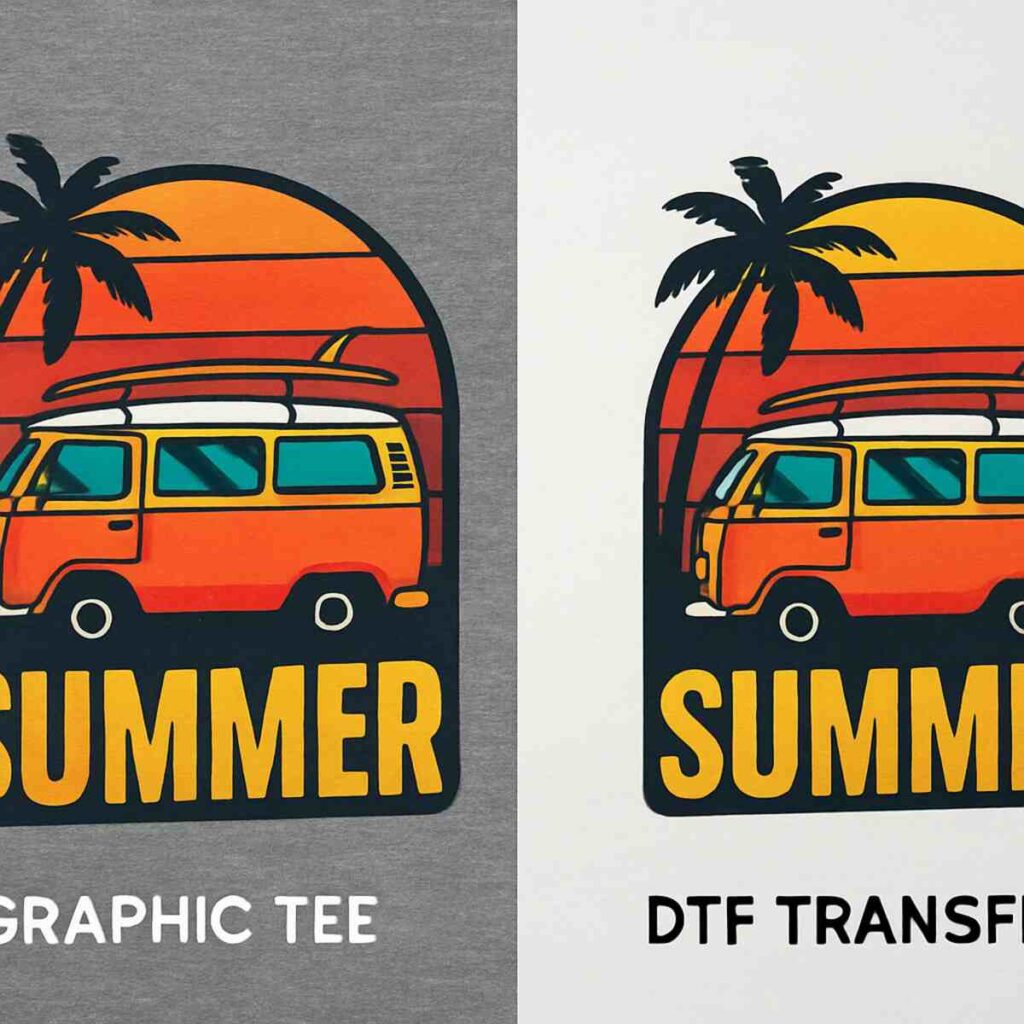

Have you ever spent hours carefully peeling tiny scraps of vinyl away from a custom T-shirt design, only to watch the graphic crack and peel after a single trip through the laundry? Anyone who has tried to make personalized apparel at home knows the sheer frustration of traditional iron-on methods. Creating a family photo on a black shirt usually results in a thick, rubbery patch that feels like wearing a heavy sticker. The Amazing fact about direct to film printer.
Fortunately, a commercial secret is rapidly making its way into the hands of crafters and small business owners. This breakthrough is called direct to film printing, and it completely bypasses the mess of traditional DIY methods. Instead of cutting out shapes or settling for faded colors, this technology allows anyone to produce retail-quality garments that rival the graphics you see in high-end streetwear boutiques.
Understanding the magic behind a dtf printer requires looking at how the image actually reaches the fabric. Your system first lays down vibrant graphics using CMYK (cyan, magenta, yellow, and black) ink onto a special transfer film, which functions much like a transparent piece of kitchen parchment that temporarily holds your design. To make sure those colors pop beautifully on dark fabrics, it automatically adds a solid layer of white ink directly over the colors, acting just like a bright primer paint on a dark bedroom wall.
Applying the design introduces the next crucial component: the adhesive powder. Think of this specialized powder as an industrial-strength glue that only sticks to the wet ink on your transfer film, effectively turning a liquid picture into a solid, wearable patch once it undergoes curing (a brief baking process that melts the glue). Operating a direct to film printer follows a surprisingly simple, linear path—print your digital design, coat the wet ink with powder, bake the adhesive, and finally heat-press it onto your chosen substrate (the blank cotton tote bag or polyester jersey you are decorating).
Moving away from outdated iron-ons delivers three massive advantages for your custom apparel projects. You instantly eliminate the tedious weeding process entirely, achieve breathtaking color vibrance across complex photographs, and create a final product that stretches naturally with the fabric. According to custom apparel industry testing protocols, a properly applied transfer routinely survives upwards of fifty heavy wash cycles without losing its incredibly soft hand-feel.
Professional standard printing has officially broken out of massive factory floors and become highly accessible for everyday creators. Expecting nothing less than industrial-strength durability and stunning visual quality is now the baseline for home-based apparel businesses. Mastering a few fundamental techniques will guarantee your next batch of custom shirts looks utterly flawless.
Choosing Your Battle: DTF vs. DTG Printing Pros and Cons
Imagine treating a T-shirt exactly like a piece of paper in your home printer. That is the idea behind Direct to Garment (DTG) printing, a popular method that sprays ink right onto the fabric. However, there is a hidden, messy catch: pre-treatment. Before printing, the shirt requires a chemical liquid primer; otherwise, the wet ink just soaks into the fibers and looks incredibly dull. This extra step adds both time and chemical costs to every single shirt you make.
Weighing the DTF vs DTG printing pros and cons helps you save money and pick the right machine for your business volume. A direct to film printer sidesteps the pre-treatment hassle entirely by putting the ink onto a transfer sheet first. Here is how the two technologies compare:
- Equipment Cost: DTG setups are highly expensive due to complex internal ink systems, whereas DTF equipment is much more budget-friendly for startups.
- Fabric Compatibility: DTG strictly requires 100% cotton to look its best. DTF easily bonds to cotton, polyester, canvas, and heavy blends.
- Production Speed: DTG is heavily slowed down by the pre-treating process. DTF lets you print dozens of transfers ahead of time and press them onto shirts in just seconds.
Choosing the right technology ultimately depends on what you want to sell. If you only print on cotton tees and have a massive budget, DTG offers a remarkably soft feel. But if you want to completely eliminate pre-treatment chemicals and decorate tough polyester sports jerseys, DTF is the clear winner. Understanding these fabric boundaries helps determine when to rely on DTF over other methods like dye sublimation.
The Sublimation Alternative: When to Choose DTF Over Dye-Sub
If you craft custom apparel, you might know about dye sublimation—a process turning ink into gas to permanently dye fabric. While beautifully soft, sublimation has a notorious drawback: it strictly requires light-colored, polyester garments. Trying to sublimate a colorful photo onto a black cotton hoodie leaves an invisible image because the translucent ink relies entirely on a white background.
Overcoming those frustrating fabric restrictions is where direct to film technology shines. By printing a solid white base layer underneath the colors, the artwork remains unaffected by the shirt’s natural shade. Instead of dyeing fibers, DTF uses adhesive powder to trigger polymer bonding—melting a flexible glue that strongly anchors the ink to any material. When navigating sublimation vs dtf for beginners, this ability to effortlessly decorate dark cotton is often the deciding factor.
The choice between a gas dye and a film transfer ultimately depends on your product line. Sublimation works wonderfully for white athletic wear, but DTF unlocks the massive casual apparel market, including heavy canvas and black denim. Once you commit to the versatility of transfer sheets, you must decide how the final image catches the light to best complement the garment.
Matte vs. Glossy PET Film: Which Finish Makes Your Designs Pop?
The magic of a direct to film printer begins with a transparent sheet called PET film. Think of this like high-tech kitchen parchment paper designed to hold wet ink temporarily. To ensure designs peel away perfectly after being heat-pressed onto a shirt, these films are treated with a “release coating.” This invisible layer dictates how easily the plastic lifts off the fabric and exactly what the final artwork will look like.
Choosing a matte vs glossy PET film depends on your desired “retail look” and your workspace environment. Consider these key differences when deciding which finish makes your designs pop:
- Visual Shine: Glossy films leave a sleek, reflective surface ideal for vibrant, modern photos. Matte films provide a flat, soft-touch finish that beautifully mimics traditional screen printing.
- Release Ease: Matte films generally peel away effortlessly, making them highly forgiving for beginners, whereas glossy sheets require a bit more careful handling during the pressing stage.
- Static and Durability: Both finishes offer excellent wash durability, but matte films significantly reduce static electricity. This is a lifesaver in dry climates where stray adhesive powder might accidentally stick to a glossy film’s background.
Matching the right finish to your customer’s preference effortlessly elevates a simple craft into a professional garment. Achieving those vivid colors on either film type, however, relies entirely on a heavy white base layer flowing smoothly through well-maintained circulation systems.
Why Your White Ink Needs a Workout: Managing Circulation Systems
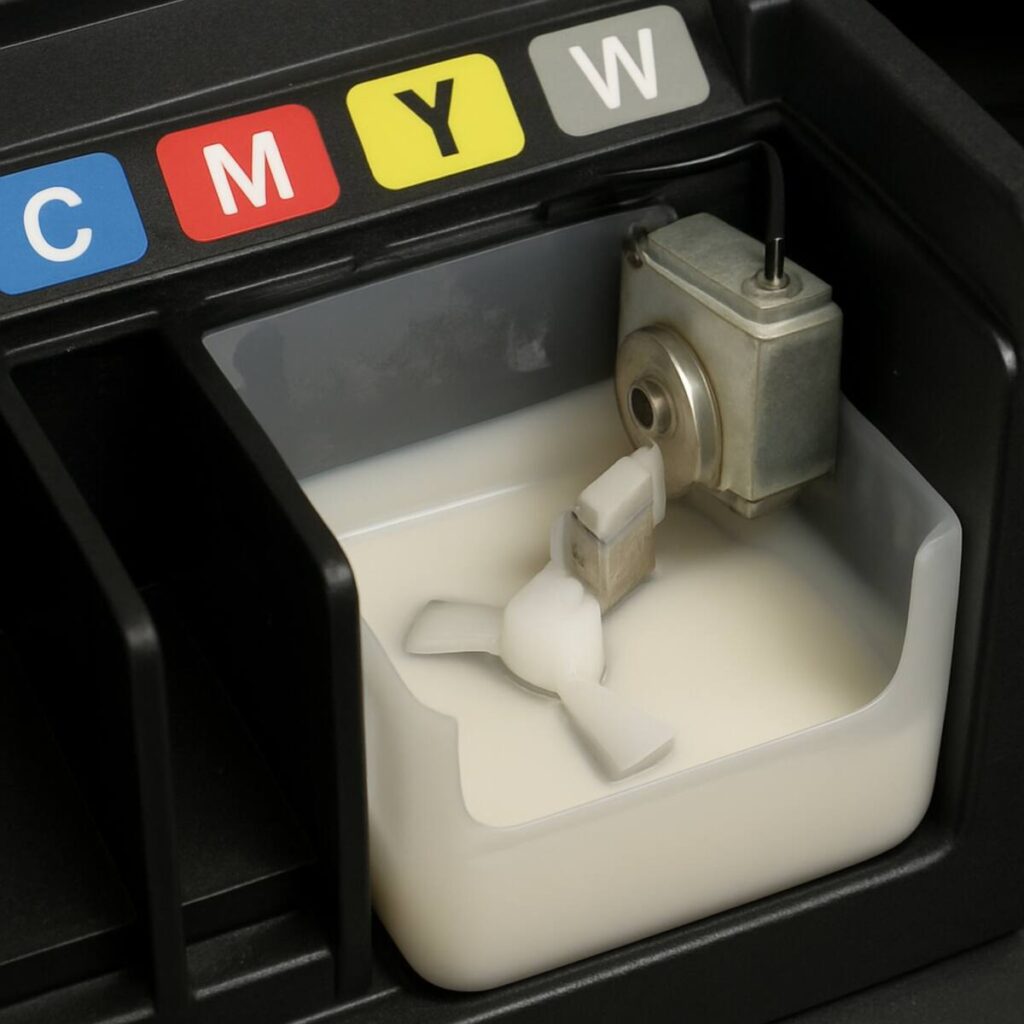
Getting that brilliant, opaque base layer to pop beautifully on dark fabrics relies on a special ingredient called titanium dioxide. Think of this white ink as the essential “primer” coat used before painting a dark wall. Because it needs to be incredibly dense to block out the color of the shirt underneath, the titanium dioxide makes it physically heavier than your standard cyan or magenta colors.
When left sitting still, this heavy pigment acts exactly like natural peanut butter or oil-and-vinegar dressing—the dense parts sink to the bottom while the clear liquid floats to the top. If a machine sits idle in a chilly workspace, this separation happens even faster. Trying to print with separated ink guarantees a watery, weak base coat that ruins your design and jams the tiny nozzles inside the machine.
To combat this settling, every high-quality dtf printer uses an automated mechanical stirrer or a circulation pump. This internal system literally gives your ink a workout, gently mixing the fluid to keep those heavy particles suspended evenly. Proper white ink circulation system maintenance is often as simple as ensuring this motor runs daily and occasionally giving the physical ink tanks a gentle manual shake to help the process along.
Dedicating just five minutes a day to checking these moving parts easily prevents the nightmare of replacing a ruined $500 printhead. Keeping that primer perfectly mixed ensures your colors stay vibrant and your equipment stays healthy over the long haul. With the primer flowing beautifully, the delicate nozzles must be protected from surrounding air to prevent clogs.
Preventing the Dreaded Clog: Maintaining Printheads in Humid Climates
Leaving the cap off a marker guarantees it will dry out, and the exact same rule applies to your printing equipment. DTF inks require a stable relative humidity (the amount of moisture in the air) to stay liquid. If your workspace gets too dry, ink crusts inside the tiny nozzles. You can catch early warning signs by running a quick nozzle check—a test print verifying all ink jets fire straight. If you notice a deflection (where ink sprays sideways like a kinked garden hose), you must clean the system before that slight blockage becomes a permanent clog.
Protecting these delicate parts is the absolute foundation of dtf printer maintenance. When idle, the machine parks on a capping station, which acts as an airtight rubber lid over the nozzles. However, preventing printhead clogging in humid climates or overly dry rooms often requires extra defense, like the “wet cap” technique. This involves adding specialized cleaning fluid to the capping pad to lock in moisture during storage. Adopt this simple 3-step daily shutdown procedure:
- Print a final nozzle check to confirm clear jets.
- Wipe down the rubber blade that sweeps the printhead clean.
- Apply moisturizing solution to the capping station for overnight protection.
Mastering these quick daily habits ensures your machine consistently delivers retail-quality, vibrant designs. With your freshly printed ink sitting perfectly on the transparent transfer film, it is time to apply the hot melt adhesive powder.
The Magic Glue: Applying Hot Melt Adhesive Powder Without the Mess
When your design emerges from the direct to film printer, the ink is completely wet. This is the exact moment to apply TPU powder, a hot melt adhesive acting as the glue that bonds your image to the fabric. Think of it like coating a damp painting with fine sand; the powder only sticks to the wet ink. Achieving an even, light dusting guarantees a soft, flexible hand-feel on the final garment rather than a stiff patch.
Removing the excess dust from the film is just as important as the initial coating. If stray powder clings to the unprinted areas, it melts into tiny, unwanted dots—known as “speckling”—on your clean shirt. Prevent this by giving the sheet a firm flick to knock off loose residue. For larger setups, an automated powder shaker handles this hot melt adhesive powder application, safely vibrating the film to drop leftover dust into a recycling bin.
Your fabric color actually dictates which powder you should use for retail-quality results. While standard white adhesive works beautifully for most items, switching to black powder prevents bright outlines from showing when pressing designs onto dark hoodies. With your image flawlessly coated and the stray dust cleared, that powdery glue must now be melted into a solid layer to lock the design together.
Oven or Heat Press? How to Cure DTF Transfers Correctly
Once your design is perfectly dusted, that loose adhesive needs to be melted into a durable, rubbery skin through a process called curing. Because melting this glue releases fumes—a chemical phase known as off-gassing—working in a well-ventilated room or using a small extractor fan is absolutely essential. Understanding how to cure transfers correctly is the secret to ensuring your vibrant images survive countless cycles in the washing machine.
You don’t necessarily need a specialized industrial oven to bake your adhesive. Small business owners often save money by utilizing the “hover” method with a standard heat press. By lowering the hot upper platen so it sits just barely above the film without actually touching it, the radiant heat melts the powder perfectly. Finding the best curing temperature for transfers depends slightly on your equipment, but here is a reliable starting point:
- DTF Curing Oven: Bake at 230°F to 250°F (110°C to 120°C) for 2 to 3 minutes.
- Heat Press (Hover Method): Hover the hot plate at 300°F to 325°F (150°C to 160°C) for 2 to 4 minutes.
The true test of a successfully baked sheet relies on visual cues rather than a strict timer. When finished, the dry dust transforms into a glossy, semi-transparent layer featuring an “orange peel” texture that looks very similar to melted sugar. If the glue still looks grainy, it needs more time; if it bubbles, it got too hot. Occasionally, even flawlessly melted sheets emerge looking damp. If you encounter strange moisture after baking, troubleshooting for oily residue is the immediate next step.
Troubleshooting ‘Sweaty’ Prints: Fixing Oily Residue on Your Film
Pulling a freshly baked transfer out of your oven only to find it looks wet or greasy is a frustrating moment in dtf printer troubleshooting. This “sweaty” look happens because DTF inks contain glycerin, an ingredient that acts like a moisturizer to keep the liquid flowing smoothly through the machine without clogging. When you heat the film, this moisture needs to evaporate—a process called ink outgassing. If the moisture doesn’t completely escape during baking, the glycerin migrates to the surface, leaving behind oily spots that prevent the adhesive from sticking to your shirt properly.
To prevent these greasy patches from causing your final designs to wash off or peel prematurely, you need to adjust your heating strategy. Certain brands of ink contain higher levels of glycerin and require a bit more time to fully dry out. When fixing oily residue on film, try leaving your transfer under the heat for an extra thirty to sixty seconds. You want to give that trapped moisture enough time to turn into vapor and float away, leaving only a perfectly dry, melted glue layer behind.
Sometimes the secret to a dry film actually starts before the adhesive is even applied. If your white base layer looks smudged or heavily saturated, your machine might be laying down ink too quickly, trapping liquid underneath the surface. Slowing down your print speed gives the heavy white layer a moment to settle and breathe before the powder is added. Once you conquer these moisture issues and your transfers are coming out flawlessly dry, you are ready to dial in the perfect heat settings for a successful press.
Master the Press: Perfect Heat Settings for Cold Peel Success
Applying a perfectly dry transfer to your shirt is the final step, but rushing it can ruin your hard work. When you pair a dtf printer with a heat press, the magic happens through the melt. Unlike basic iron-on crafts where you peel the plastic while it’s warm (hot peel), most high-quality DTF transfers require a “cold peel.” You must wait until the film is entirely cold before removing it. Peeling too early pulls the still-soft adhesive off the fabric, causing frustrating design lifting.
To achieve retail-quality results that stretch naturally, adjust your heat press settings for cold peel films based on garment thickness—a heavy hoodie requires firmer pressure than a thin tee. Follow this reliable sequence:
- 1st Press: Press at 315°F for 15 seconds to melt the glue into the fibers.
- Cooling: Remove the shirt from the heat until the plastic feels entirely cool to the touch.
- Peeling: Roll the film backward slowly, keeping it close to the fabric.
- 2nd Press: Perform the crucial “finishing press.”
That final five-second step is the secret to increasing your garment’s wash durability by up to 50%. Cover your freshly peeled design with a non-stick Teflon sheet (a reusable, heat-resistant mat) and press it one last time. This pushes the ink deeper into the fabric and removes any artificial plastic shine, leaving a soft, professional-grade finish. While this method works beautifully on standard cotton, synthetic fabrics introduce a unique chemical challenge known as dye migration.
Printing on Dark Polyester: Avoiding Dye Migration Disasters
Pressing a crisp white logo onto a red soccer jersey only to watch it turn a murky pink hours later is a common frustration. While standard pressing works beautifully for cotton, printing on dark polyester fabrics introduces a chemical reaction known as dye migration, or sublimation bleeding. This happens when the synthetic garment’s original dye sneaks upward and aggressively stains your freshly applied design.
The culprit behind this color-shifting disaster is high heat. When synthetic apparel gets too warm under your heat press, the dyes trapped inside the fabric actually turn into a gas. Because your design’s white ink base layer is still vulnerable as it melts into the shirt, that gaseous dye easily seeps straight into the transfer, permanently tinting your beautiful artwork.
Defeating this issue requires a dual-defense strategy. First, you must drop your heat press temperature below 290°F to keep the garment’s dyes in a safe, solid state. Second, instead of using standard white adhesive from your dtf printer workflow, you should swap it for a specialized “carbon blocker” powder. Think of this dark-tinted adhesive as a protective lead shield at the dentist’s office; it creates an impenetrable wall that physically stops the rising dye gas from ever touching your ink.
Equipping yourself with this barrier ensures your vibrant sports graphics stay perfectly colored on any dark athletic wear. Once these designs are locked in place, their longevity in the wash becomes the true measure of success.
Built to Last: Understanding the Washability and Durability of DTF Prints
After pressing a shirt, the ultimate test happens in the real world. Many crafters wonder if a direct to film printer can match the toughness of traditional screen printing. The answer is yes, provided the adhesive is correctly applied. To verify this bond, perform a simple “stretch test” on your finished garment. Gently pull the printed area apart; a properly cured design should stretch and snap back into place like a rubber band without any cracking.
Surviving the laundry room is just as crucial. When assessing the washability and durability of dtf prints, you can expect them to easily last for fifty or more heavy wash cycles. However, you can double the lifespan of your custom apparel by adopting one simple habit: washing the garment inside-out. This protective measure prevents the transfer from rubbing against zippers, buttons, or abrasive fabrics during the tumbling process, keeping the design looking brand new.
Achieving this retail-quality longevity actually begins long before the ink ever touches the film. Your equipment relies on exact instructions to know precisely how much white base to lay down for a bulletproof transfer, which requires specialized RIP software.
The Secret Translator: Why You Need RIP Software for Digital Transfers
Hitting “print” on a standard home word document is easy because your computer talks directly to the machine using basic instructions. However, a commercial dtf printer requires a much smarter translator known as RIP (Raster Image Processor) software for digital transfers. Standard office printer drivers simply do not understand garment ink chemistry or layering. For example, before ink ever hits the film, this specialized program automatically handles the “mirroring” process, flipping your image backward so any text reads perfectly once it is pressed face-down onto a T-shirt.
Beyond simply flipping your artwork, this program manages the heavy lifting of ink control to ensure professional results. Maximizing your system’s potential means utilizing the top 3 RIP software features for DTF:
- White ink density: The software calculates the precise amount of white “base coat” needed to make colors pop on dark fabrics, easily saving you 20% on ink costs by preventing over-saturation.
- Choke/Spread: It slightly shrinks (or “chokes”) that white base layer so no ugly white borders peek out from behind your colorful design’s edges.
- Color Profiling: It utilizes specific digital color maps (called ICC profiles) to guarantee that a vibrant “Nike Red” logo on your computer screen actually prints as a deep red, rather than a muddy orange.
Mastering this digital bridge ensures your equipment runs flawlessly, turning simple image files into retail-quality apparel without wasting expensive supplies. Because the software tightly dictates every single drop of color and adhesive laid onto the transfer, you can predict precisely what your materials will run you. Armed with this exact usage data, calculating an accurate cost per shirt becomes straightforward.
Crunching the Numbers: A Step-by-Step Cost Per Shirt Calculation
Figuring out your exact expenses is the secret to pricing your products for maximum profit. A realistic cost per shirt calculation for transfers adds up the pennies spent on the transparent film, the adhesive powder, and the actual ink droplets. For a standard colorful logo, these consumable materials often total less than a single dollar. Because the base cost to create the physical print is so remarkably low, selling a finished custom hoodie leaves plenty of room for a healthy retail markup.
Beyond the physical materials pressed onto the fabric, smart creators must also factor in hidden expenses. True overhead includes the ‘waste’ ink flushed out during necessary daily cleaning cycles, which stops the thicker white base coat from clogging the equipment’s tiny nozzles. Even though this ink never makes it onto a customer’s shirt, it is a vital part of operating the machine. Distributing this minor maintenance expense across the total garments you sell ensures your profit margins remain perfectly accurate.
Equipment purchases dramatically influence this overall financial math. You must calculate the ROI—or Return on Investment—when deciding between a cheap desktop conversion kit and a dedicated direct to film printer. Converted home paper printers save money upfront but require intense manual maintenance and waste far more ink over time. Conversely, a purpose-built commercial machine significantly reduces troubleshooting, paying for itself much faster through consistent, stress-free sales.
A solid grasp of these basic business numbers empowers you to confidently turn a creative hobby into a reliable income stream. Once daily orders outgrow a desktop setup, transitioning to large-format textile printing equipment becomes a necessary evaluation.
Scaling Up: When to Move to Large Format Textile Printing Equipment
Outgrowing a desktop setup is a thrilling milestone, but hand-applying adhesive powder to individual sheets quickly becomes exhausting. The break-even point for upgrading to a 24-inch format system hits when you spend more hours managing the manual process than actually designing. By investing in large format textile printing equipment, you transition to a “roll-to-roll” method. Instead of feeding single pages into the machine, this continuous spool effortlessly prints dozens of large hoodie designs simultaneously without stopping.
This industrial DTF printer setup truly shines when it comes to reclaiming your valuable time, primarily through the automated shaker-dryer. Think of this attachment as a robotic assistant. As freshly inked film continuously rolls out, this enclosed tunnel automatically coats it with adhesive “glue” powder, taps off the excess, and bakes it dry. You no longer manually dip, shake, or hover a heat press over individual transfers to set them. Simply hit print and return later to a finished, ready-to-press roll.
Moving up to commercial gear requires strict physical preparation. Unlike a compact desktop unit, this high-volume setup demands significant workspace and dedicated 220-volt electrical outlets to power the baking ovens. Mapping out these logistics ensures you avoid blown fuses or cramped quarters. Once the workspace is prepared for this heavy-duty hardware, a professional workflow naturally follows.
Your Roadmap to Success: Building a Professional Printing Workflow
Printing full-color, photographic graphics onto dark cotton is no longer an expensive industry secret. Direct to film printing bridges the gap between basic home crafting and professional apparel decoration. Instead of struggling with thick, peeling vinyl layers or fading paper transfers, you have the knowledge to produce soft, stretchy, and durable garments. The process of turning liquid ink into a wearable masterpiece relies entirely on mastering the synergy between your white base layer, transfer film, and adhesive powder.
To protect your hardware and ensure vibrant results every single time, your immediate priority should be establishing a healthy routine. A dtf printer utilizes specialized white ink that is much thicker than standard desktop ink and requires regular movement to prevent clogs. Treat brief daily care—like maintaining printheads and circulating ink—as a mandatory part of your workflow to avoid frustrating mechanical roadblocks.
With maintenance habits locked in, focus on sourcing high-quality consumables that match your machine. Finding a reliable supplier for your core materials guarantees your designs will look flawless and survive dozens of trips through the washing machine. You are no longer limited by the fabrics traditional methods dictate or the simple shapes basic cutters require. Prepare your workspace, load your first transparent sheet, and confidently transform your digital designs into professional-grade custom apparel.