
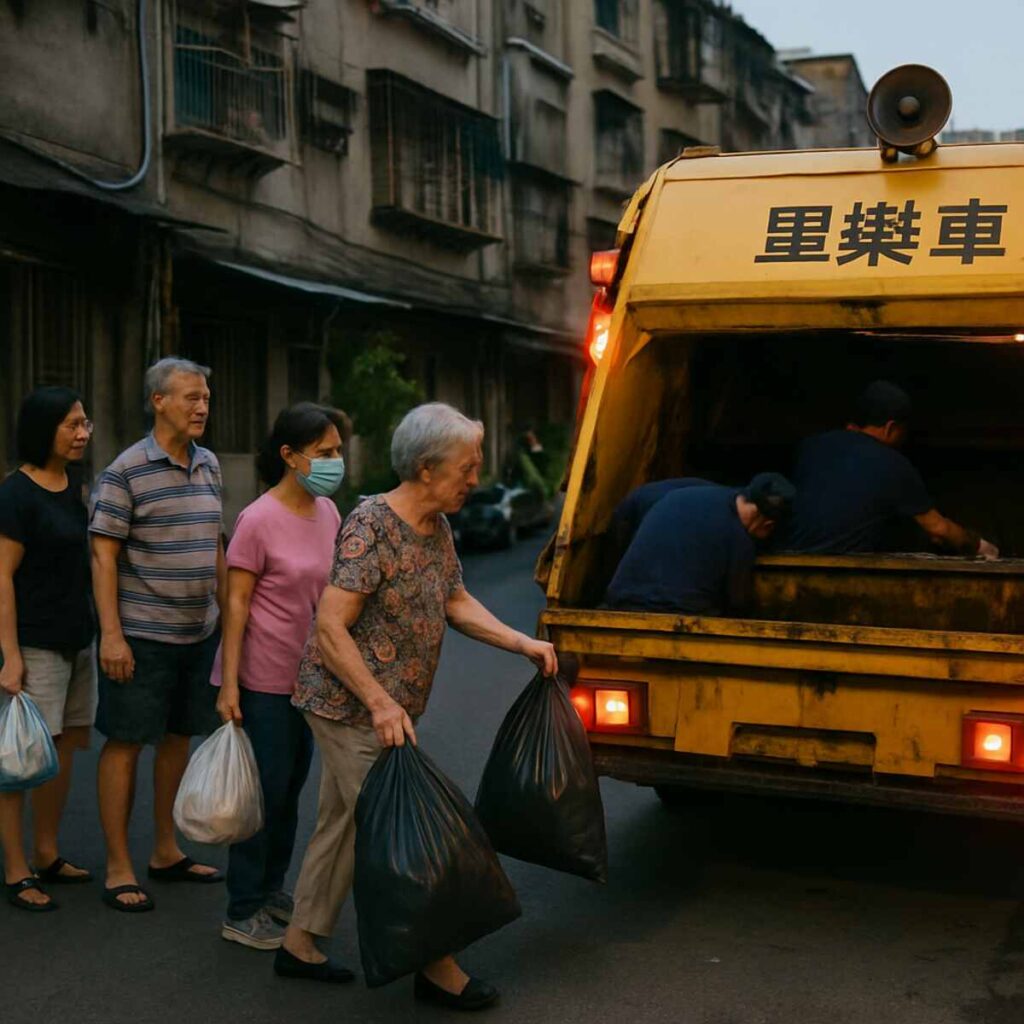

If you are standing on a street corner in Taipei at dusk, you might hear a melody wafting through the air. It sounds like an ice cream truck playing Beethoven’s “Für Elise” or Badarzewska-Baranowska’s “A Maiden’s Prayer.” But instead of children running out for sweet treats, you will see residents emerging from their homes carrying bags of sorted trash. This is the symphony of Taiwan waste management, a system globally recognized for its efficiency, community participation, and stunning environmental impact. Obtain the Best information about phân loại rác ở đài loan.
In the 1990s, Taiwan was disparagingly referred to as “Garbage Island” due to overflowing landfills and rapid industrialization. Today, it boasts a recycling rate of over 55%, rivaling top nations like Germany and South Korea. This monumental transformation did not happen overnight. It was born from strict government policies, innovative public incentive structures, and a nationwide shift in cultural habits.
For newcomers, expats, and visitors, navigating this system can initially feel like solving a complex puzzle. However, mastering Waste Sorting in Taiwan is a rite of passage. It connects you to the local community and makes you an active participant in an inspiring environmental success story.
This comprehensive guide will walk you through everything you need to know about recycling in Taiwan, from understanding the famous musical garbage trucks to decoding the intricate recycling rules.
The Core Framework: The Pay-As-You-Throw Garbage Fee System
The cornerstone of Taiwan’s environmental success is a simple economic principle: the more trash you produce, the more you pay. This is executed through the pay-as-you-throw garbage fee system.
Unlike many countries where waste management is funded invisibly through property taxes, Taiwan makes the cost of waste disposal explicit. To dispose of general, non-recyclable garbage in major municipalities such as Taipei and New Taipei City, you must purchase government-mandated trash bags.
How to Use Taipei City Blue Trash Bags
If you live in the capital, learning how to use Taipei city blue trash bags is your first critical lesson. These specific blue bags are authorized by the city government and have an anti-counterfeit hologram printed on them.
- Where to Buy: You can purchase these bags at any convenience store (7-Eleven, FamilyMart, OK Mart, Hi-Life), supermarket (PX Mart, Carrefour), or local grocery store. Simply ask the cashier for “lè sè dài” (垃圾袋).
- Sizing and Costs: They come in various sizes to accommodate different household needs, ranging from 3 liters (ideal for small bathroom bins) to 120 liters (used by businesses). The cost of the bag covers the waste disposal tax. For example, a pack of 20 medium-sized bags (14 liters) costs around 100 NTD (about $3 USD).
- The Golden Rule: Only general waste goes into these blue bags. Recyclables and food waste are free to dispose of. This creates a massive financial incentive to sort your waste meticulously. The better you are at waste sorting taiwan, the fewer blue bags you use, saving you money every month.
- Regional Differences: Note that Taipei City uses blue bags, while New Taipei City uses pink ones. You cannot cross city lines with your garbage bags—a pink bag will be rejected by a Taipei City garbage collector.
A Cultural Phenomenon: The Musical Garbage Trucks
In most Western countries, large dumpsters are left out on the curb for a truck to empty in the early hours of the morning. Taiwan’s dense urban layout and subtropical climate make leaving garbage on the street a recipe for hygiene disasters, pests, and foul odors. Therefore, the trash does not wait for the truck; the people do.
What Time Are Taiwan Garbage Truck Schedules?
You might be wondering, what time are Taiwan garbage truck schedules? The answer varies depending on your exact neighborhood, but generally, the trucks run five days a week (most take Wednesdays and Sundays off). There are usually two shifts: late afternoon (around 4:00 PM to 6:00 PM) and evening (around 8:00 PM to 10:00 PM).
To avoid missing the truck, you can:
- Listen for the music. The melody can be heard from several blocks away.
- Ask your landlord or neighbors for the exact intersection and time.
- Download localized municipal apps (like the “Taipei City Trash Truck Tracker” app), which provide real-time GPS tracking of the trucks, so you know exactly when to walk downstairs.
The Musical Garbage Truck Yellow vs White Trucks
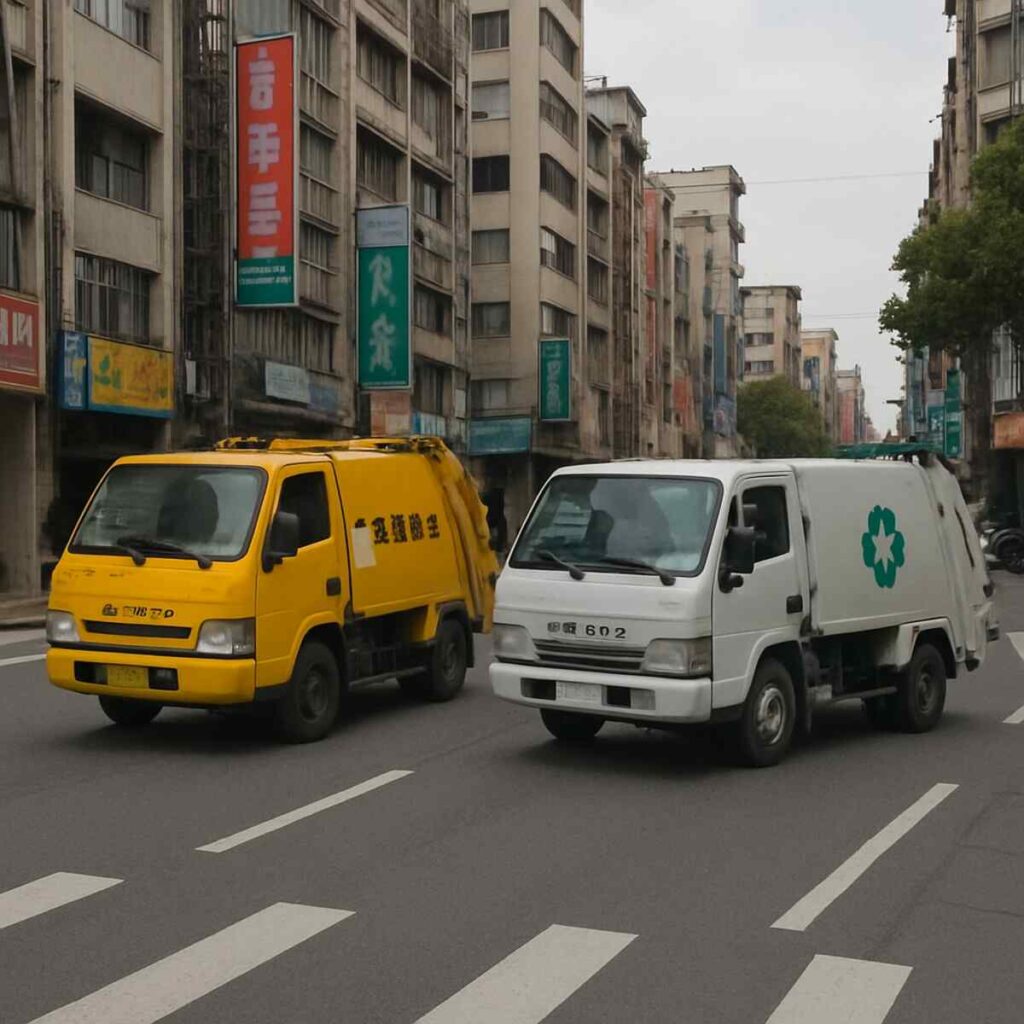
When the convoy arrives, you will notice a distinct color-coding system. Understanding the musical garbage-truck yellow vs. white trucks dynamic is crucial for swift disposal.
- The Yellow Truck: This truck always arrives first playing the music. It is strictly for general waste (the trash inside your paid blue or pink bags) and food waste. At the back of the yellow truck, there are hanging buckets for your food scraps.
- The White Truck (or Open-Bed Truck): Following closely behind the yellow truck is the recycling truck. Sanitation workers stand on the back of this truck to manually receive and sort your recyclables on the fly. You hand them your sorted bags of plastic, paper, and metal, and they toss them into the correct compartments.
Decoding the Categories: The Taiwan 7-in-1 Recycling Classification System
The secret to Taiwan’s high recycling rate is granularity. Putting all recyclables into one single “co-mingled” bin (as is common in the US and UK) often leads to contamination, meaning much of it ends up in landfills anyway.
Taiwan utilizes the Taiwan 7-in-1 recycling classification system. While it sounds intimidating, it simply means separating your waste into distinct, clean categories. The specific categories can sometimes vary slightly by district, but the fundamental breakdown is as follows:
1. Paper and Cardboard
Clean paper, newspapers, magazines, and flattened cardboard boxes go here. Receipts, however, are an exception; thermal paper cannot be recycled and must go into general waste.
2. Paper Containers (The Coffee Cup Dilemma)
A common question among expats is, are coffee cups recyclable in Taiwan? Yes, they are, but not with regular paper. Paper cups, bento boxes, and milk cartons are lined with a thin layer of waterproof plastic or wax. They must be separated from regular paper so they can be sent to specialized processing plants that strip the plastic film from the paper pulp.
3. Plastics
Taiwanese recycling centers process a vast amount of plastic. This includes PET bottles (water and soda bottles), shampoo bottles, and clean plastic food containers. You should always crush plastic bottles to save space before handing them to the white truck.
4. Glass
Glass bottles and jars must be separated by color (clear, brown, green) in some districts, though handing them together to the white truck worker is usually acceptable. Broken glass should be wrapped safely in newspaper and clearly labeled so sanitation workers do not cut their hands.
5. Metals
Aluminum cans, tin cans, and clean metal food trays fall into this category. Like plastics, crushing aluminum cans is highly encouraged.
6. Styrofoam
Clean Styrofoam (like the packaging used to protect new electronics) is recyclable. However, it must be completely free of tape, dirt, or food residue.
7. Soft Plastics and Plastic Bags
Clean plastic bags (such as shopping bags or produce bags) can be recycled, provided they are free of grease or food stains. They are often melted down into plastic pellets to create new goods.
The Importance of Rinsing
A cardinal rule mandated by the Taiwan Environmental Protection Administration’s recycling rules is the need to rinse and dry recyclables before disposal. A plastic bento box covered in chili oil and leftover rice is considered contaminated and will be rejected by sanitation workers. A quick rinse with water ensures the items can be processed properly and prevents foul odors in your home while you wait for collection day.
Navigating Food Waste: A Crucial Distinction
Food waste management in Taiwan is a masterclass in agricultural efficiency. Because of the hot, humid climate, throwing food waste into the general trash creates methane-producing nightmares in landfills. Instead, food waste is strictly separated.
When you walk up to the yellow garbage truck, you will usually see two different colored barrels hanging off the back (often one blue/green and one red). You must understand the difference between raw and cooked food waste, as they serve entirely different ecological purposes.
Cooked Food Waste (Pig Feed)
Cooked food waste goes into the red barrel. This includes leftovers, meat scraps, bones (soft ones), bread, noodles, and anything that has been processed or cooked.
Why is it separated? Taiwan has a robust pork industry, and cooked food waste is boiled, sterilized, and repurposed as pig feed. This is an incredible example of circular agriculture. Note: Due to recent concerns over African Swine Fever, some municipalities have temporarily banned food waste from being used as pig feed, redirecting it to composting or bioenergy, but sorting habits remain legally enforced.
Raw Food Waste (Compost)
Raw food waste goes into the blue or green barrel. This includes fruit peels, vegetable scraps, coffee grounds, tea leaves, and eggshells. This waste cannot be fed to pigs because it lacks nutritional value or is difficult for animals to digest. Instead, it is taken to industrial composting facilities where it is turned into organic fertilizer for local farmers.
Deciphering the Labels
To make sorting easier, the government has standardized packaging labels. If you examine almost any product bought in a Taiwanese store, you will find specific symbols.
Reading recycling symbols on Taiwanese packaging is straightforward. The primary recycling symbol looks like a square made of four arrows pointing clockwise. If a product has this symbol, it legally must be recycled. Inside or next to this square, there will often be an additional symbol indicating the material (e.g., a triangle with a number for plastics, or Chinese characters indicating aluminum 鋁, glass 玻璃, or paper 紙).
Familiarizing yourself with these symbols takes the guesswork out of your daily sorting routine.
Disposing of Specialty Items and Bulky Waste
The standard musical garbage truck is not equipped to handle everything. For items that are hazardous, large, or electronic, there are specific protocols.
Disposing of Large Furniture in Taiwan
You cannot simply leave an old sofa or mattress on the sidewalk. Disposing of large furniture in Taiwan requires a phone call.
- Contact the Environmental Protection Bureau (EPB): Call your local district’s cleaning squad (each district has a specific hotline number).
- Schedule a Pickup: Inform them of the items you need to dispose of. They will give you a specific time and location (usually a nearby street corner or right outside your building) to place the furniture.
- Place the Items: Move the furniture to the designated spot only at the agreed-upon time.
- Cost: Surprisingly, this service is mostly free for regular household items, heavily subsidized by the government to prevent illegal dumping.
A quick tip: The weeks leading up to Lunar New Year are the busiest time for bulky waste disposal, as Taiwanese families do their traditional “spring cleaning.” If you need to throw away furniture during this time, book weeks in advance!
Where to Drop Off Electronic Waste in Taiwan
Electronic waste (e-waste) contains heavy metals and toxic chemicals that must never be incinerated. Fortunately, Taiwan has made e-waste disposal incredibly convenient.
So, where to drop off electronic waste in Taiwan?
- Convenience Stores: You can take old batteries, CDs, laptops, and mobile phones to 7-Eleven or FamilyMart. As an added bonus, they weigh your e-waste and give you store credit to buy snacks or drinks!
- The White Recycling Truck: You can hand smaller electronics directly to the workers on the white recycling truck.
- Designated E-Waste Bins: Many MRT stations and public buildings have designated bins for lightbulbs and batteries.
Life in an Apartment: The Ultimate Convenience
If chasing a garbage truck in the rain sounds daunting, there is a widely sought-after alternative. For many residents, the ultimate real estate amenity is a building with its own waste management system.
Community collection points for apartment complexes completely change the daily routine. Most modern high-rises and mid-sized apartment buildings have a dedicated “garbage room” (usually in the basement).
In these rooms, the building management has set up large bins that are perfectly aligned with the Taiwan Environmental Protection Administration’s recycling rules. You will find massive bins for plastics, paper, metal, glass, and a refrigerated bin for food waste (to prevent smells and fruit flies).
The beauty of these community collection points is that you can take your trash out at any time, day or night. You must still use the paid blue bags for general waste, and you must still meticulously sort your recyclables. The building’s management company then hires private contractors to haul the sorted waste away, saving residents the trouble of adhering to municipal truck schedules.
Best Practices: Household Waste Separation for Expats in Taiwan
For foreigners arriving in the country, the learning curve can be steep. Household waste separation for expats in Taiwan requires setting up systems at home to make the process frictionless. Here are some actionable tips:
- Multiple Bins are Mandatory: Gone are the days of a single kitchen trash can. You will need at least three receptacles: one for general waste (lined with your city’s paid bag), one for mixed recyclables, and a small container with a tight lid for food waste.
- Keep a “Go Bag”: Many locals use a sturdy, reusable tote bag to store their rinsed recyclables. When it is time to meet the white truck, they simply carry the tote down, distribute the items into the truck’s compartments, and bring the empty tote back upstairs.
- Freeze Your Food Waste: If you cook frequently but can only catch the garbage truck every few days, your food waste will start to smell in Taiwan’s heat. A brilliant local hack is to keep your food waste in a dedicated container inside your freezer until garbage day.
- Observe Your Neighbors: If you are unsure which compartment on the white truck a specific item goes into, watch the locals or simply hand it to the sanitation worker with an inquiring look. The workers are highly trained and incredibly fast; they will happily toss it in the right bin for you.
The Bigger Picture: Taiwan Circular Economy and Zero Waste Goals
Taiwan’s meticulous sorting system is not just about keeping the streets clean; it is part of a grander national strategy. The island nation is aggressively pursuing the Taiwan circular economy and zero waste goals.
Because Taiwan is a densely populated island with limited landmass, burying trash in landfills is no longer a viable option. Currently, what little general waste remains after intensive recycling is sent to highly advanced, emissions-controlled incinerators that also generate electricity for the grid.
Looking to the future, the government and the private sector are investing heavily in circular economy technologies.
- E-waste Mining: Taiwanese companies are global leaders in extracting gold, copper, and rare earth metals from discarded smartphones and laptops, funneling these materials directly back into the electronics manufacturing sector.
- Upcycling Plastics: Polyethylene terephthalate (PET) bottles collected from the streets of Taipei are shredded, melted, and spun into high-tech polyester yarn. This yarn has been used to create jerseys for teams in the FIFA World Cup, turning Taiwanese street trash into global sportswear.
- Zero Waste by 2050: In line with global climate initiatives, the Environmental Protection Agency is continually refining policies to reduce single-use plastics. Recent bans on plastic straws in stores and extra fees for plastic shopping bags are stepping stones toward a comprehensive zero-waste society.
Conclusion
Participating in Waste Sorting in Taiwan is much more than a daily chore; it is an active engagement with the country’s culture of collective responsibility. While learning the schedules of the musical trucks, understanding the pay-as-you-throw garbage fee system, and mastering the Taiwan 7-in-1 recycling classification system takes a little time, it quickly becomes second nature.
By taking the time to separate your raw food waste from your plastics and ensuring your coffee cups are properly disposed of, you are directly contributing to the preservation of this beautiful island. Taiwan stands as a shining global example that with the right infrastructure, economic incentives, and community spirit, humans can live in harmony with their environment, turning mountains of waste into mountains of opportunity.