
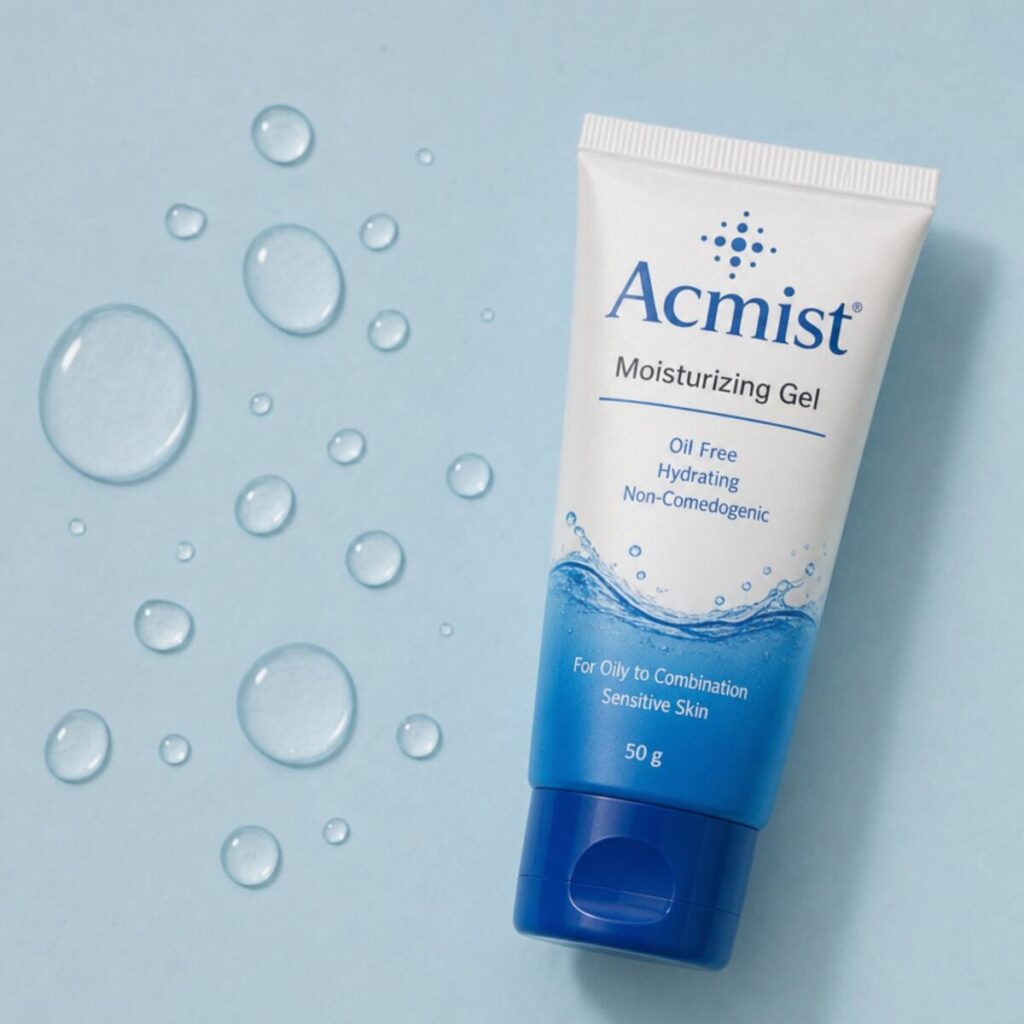

Lightweight moisture for skin that does not want heaviness
A good moisturizer for oily or acne-prone skin should feel like a quiet expert: present, supportive, and never dramatic. Acmist Moisturizing Gel is positioned as a lightweight, quick-absorbing cream gel for oily and acne-prone skin, with public product listings highlighting a non-comedogenic, non-greasy feel and a formula built around ingredients such as squalane, aloe vera extract, bisabolol, trehalose, and vitamin E acetate. (brintonhealth.com)
This page gives you the ingredient-first view shoppers usually want before buying: what is inside, why those ingredients are used, what gel cream benefits you may notice, and what to consider before adding it to your routine. It is written as a practical, review-style product guide rather than a medical promise. If you are managing persistent acne, irritation, dermatitis, or medication-related dryness, speak with a dermatologist before relying on any cosmetic moisturizer.
Why the formula gets attention
Many people with oily skin skip moisturizer because they fear shine, clogged pores, or a sticky after-feel. The better approach is not “no moisturizer”; it is choosing a texture that supports hydration without overwhelming the skin. That is where a gel-cream format can make sense.
Acmist Moisturizing Gel is commonly described as a cream gel designed for acne-prone and oily skin. The brand page highlights a lightweight, fast-absorbing, non-sticky formula, while retail listings emphasize features such as oil-free, quick absorbing, non-comedogenic, and hydrating gel base. (brintonhealth.com)
In plain English: this is not marketed as a rich night balm or heavy occlusive cream. It is positioned for people who want daily moisture with a cleaner finish.
The quick ingredient story
The acmist moisturizing cream gel ingredients listed across public sources suggest a formula built around four core jobs:
- Hydrate: ingredients such as trehalose, betaine, propanediol, and aloe vera extract are associated with humectant or water-binding functions. (incidecoder.com)
- Soften: emollients such as squalane, glyceryl stearate, C12-15 alkyl benzoate, and neopentyl glycol diheptanoate help improve slip and skin feel. (incidecoder.com)
- Soothe: aloe vera extract and bisabolol are highlighted as soothing ingredients in ingredient databases. (incidecoder.com)
- Stabilize the product: emulsifiers, texture agents, and preservatives help the cream gel remain usable, smooth, and consistent.
That balance is the heart of the product: not just “more moisture,” but moisture delivered in a texture more compatible with oily, combination, and blemish-prone routines.
Key benefits at a glance
Acmist Moisturizing Gel may be a fit if you want a moisturizer that feels lighter than a classic cream but more comforting than a watery gel.
The main gel cream benefits include:
- A lightweight cream-gel texture for daily use
- A non-greasy feel that suits people who dislike heavy moisturizers
- Humectant support for dehydrated-feeling skin
- Emollient softness from ingredients such as squalane
- Soothing support from aloe vera extract and bisabolol
- A pore-conscious positioning for oily and acne-prone skin
- Easy layering with sunscreen in the morning and compatible skincare at night
The important phrase is may support. A moisturizer can help skin feel more comfortable and balanced, but it should not be treated as a standalone acne cure, prescription substitute, or guaranteed breakout solution.
Ingredient-led product positioning
When shoppers search for an acmist cream review, they often want one of three things:
- Does it feel oily?
- Will it suit acne-prone skin?
- Are the ingredients worth it?
The answer depends on your skin, your climate, your routine, and your sensitivity profile. But from an ingredient perspective, Acmist Moisturizing Gel is clearly built around hydration, softness, and a lightweight finish rather than exfoliation or aggressive acne-targeting actives.
That distinction matters. It means this product is best understood as a supporting moisturizer within a skincare routine, not as an active acne treatment like benzoyl peroxide, adapalene, salicylic acid, or prescription therapy.
Featured ingredients and what they do
Public ingredient listings for Acmist Moisturizing Gel include aloe vera extract, squalane, bisabolol, trehalose, vitamin E acetate, aqua, betaine, propanediol, C12-15 alkyl benzoate, octyldodecyl myristate, phenoxyethanol, ethylhexylglycerin, glyceryl stearate, PEG-100 stearate, behenyl alcohol, neopentyl glycol diheptanoate, and acrylamide sodium acrylate copolymer. Some ingredient databases also list allergen-free fragrance, so anyone avoiding fragrance should check the current product label before purchasing. (1mg.com)
Formulas can change. Retailer listings can also lag behind packaging updates. Use this page as a guide, then confirm the ingredient list on the tube, carton, or seller page before applying it to your skin.
Squalane: lightweight softness without the heavy coat
Squalane is one of the standout ingredients because it behaves like a refined, elegant emollient. Ingredient databases describe it as a skin-identical emollient, and public listings for Acmist include it among the formula’s key ingredients. (incidecoder.com)
In a moisturizer, squalane is used to make skin feel smoother and more supple. It can help reduce the tight, papery feeling that sometimes happens when oily skin is stripped by harsh cleansers, acne products, or frequent washing.
Why it matters in a gel cream:
- It gives softness without the obvious “buttery” finish of richer oils.
- It can make a lightweight formula feel more complete.
- It supports comfort for skin that feels oily on the surface but dehydrated underneath.
- It improves spread, so the product can glide easily.
If your skin hates thick creams but still feels tight after washing, squalane is one reason Acmist may feel more balanced than a plain gel.
Aloe vera extract: a familiar soothing ingredient
Aloe vera extract is widely used in moisturizers for a calming, comfort-focused profile. In ingredient references, aloe vera extract is associated with soothing, emollient, and humectant functions, and it appears in public ingredient lists for Acmist Moisturizing Gel. (incidecoder.com)
This does not mean the product will resolve redness, acne, or inflammation for everyone. It simply means the formula includes an ingredient commonly chosen for skin-comfort positioning.
Aloe vera extract may appeal to you if:
- Your skin feels warm or tight after cleansing.
- You use drying skincare actives and want a more comfortable moisturizer step.
- You prefer a lighter finish but still want a calming skincare feel.
- You are building a routine around barrier support rather than harshness.
Review-style note: aloe is popular for good reason, but sensitive skin can react to almost anything. Patch testing is still wise, especially if your skin is reactive.
Bisabolol: a quiet comfort ingredient
Bisabolol is another ingredient that gives the formula a more comfort-oriented profile. Ingredient references describe bisabolol as a soothing ingredient, and it is listed as a key ingredient in public Acmist ingredient pages. (incidecoder.com)
In a product like this, bisabolol is not there to create a dramatic instant transformation. Its value is subtler: it supports the idea of a moisturizer made for skin that can feel easily unsettled.
Why shoppers care:
- It suits the product’s acne-prone and oily-skin positioning.
- It pairs well with aloe vera extract in a comfort-focused formula.
- It helps the moisturizer feel less basic and more thoughtfully built.
If your routine includes exfoliating acids, retinoids, benzoyl peroxide, or prescription acne products, a moisturizer with soothing ingredients may help your skin feel more comfortable. However, timing and compatibility matter, so follow your dermatologist’s directions if you are using medicated products.
Trehalose: water-binding support for dehydrated skin
Trehalose is a sugar-derived humectant ingredient. Ingredient references describe it as water-binding and hydration-supportive, and it is listed among the key ingredients for Acmist in public product pages. (1mg.com)
This is especially relevant because oily skin can still be dehydrated. Dehydrated skin lacks water, not necessarily oil. That is why some people experience both shine and tightness at the same time.
Trehalose helps explain the product’s appeal for people who want:
- A hydrated feel without a greasy finish
- A smoother-looking surface under sunscreen
- A moisturizer that does not rely only on heavy occlusion
- A gel-cream texture that feels fresh but not empty
In review terms, trehalose is not the flashiest ingredient on the label, but it contributes to the reason the formula may feel more hydrating than a simple mattifying gel.
Vitamin E acetate: antioxidant-positioned skin conditioning
Vitamin E acetate, also known as tocopheryl acetate, is commonly used in cosmetics as a stable vitamin E derivative. Ingredient databases describe vitamin E acetate as antioxidant-positioned, and it is included in Acmist ingredient listings. (incidecoder.com)
For shoppers, the practical benefit is skin conditioning. Vitamin E acetate can support the overall moisturizing and comfort profile of the formula, especially when paired with emollients.
Keep the claim realistic. Vitamin E in a moisturizer does not replace sunscreen, does not erase pigmentation, and does not guarantee acne improvement. Think of it as one supporting ingredient in a broader formula.
Betaine: hydration with a skin-comfort angle
Betaine appears in public ingredient listings and is categorized in ingredient databases as a moisturizer or humectant. (incidecoder.com)
It is a useful background player in a gel cream because it helps support hydration without necessarily making the product feel heavy. Alongside trehalose, propanediol, and aloe vera extract, betaine contributes to the water-focused side of the formula.
If your skin often feels tight after cleansing but becomes shiny by midday, humectants like betaine may be part of why a lightweight moisturizer feels better than skipping moisturizer entirely.
Propanediol: humectant, solvent, and texture helper
Propanediol is listed in public ingredient sources for Acmist and is categorized as a solvent and humectant. (incidecoder.com)
In product feel, ingredients like propanediol can help dissolve or carry other ingredients while also contributing to a hydrated finish. It is not the hero ingredient you buy the product for, but it is part of the formula architecture.
A good moisturizer is not just about star ingredients. It is about how the supporting ingredients help the formula apply smoothly, absorb comfortably, and remain pleasant enough to use every day.
Glyceryl stearate and PEG-100 stearate: the cream-gel builders
Glyceryl stearate and PEG-100 stearate are listed in public Acmist ingredient sources and are categorized as emollient, emulsifying, or surfactant-emulsifying ingredients. (incidecoder.com)
These are the behind-the-scenes ingredients that help water-loving and oil-loving components coexist in a stable cream-gel format. Without functional ingredients like these, a product may separate, feel uneven, or lose its elegant texture.
For the user, their role is simple: they help the gel cream feel like a gel cream.
C12-15 alkyl benzoate and neopentyl glycol diheptanoate: slip and elegance
Public ingredient listings include lightweight emollients such as C12-15 alkyl benzoate and neopentyl glycol diheptanoate. Ingredient references categorize these types of ingredients as emollients, meaning they help improve spread and skin feel. (incidecoder.com)
This matters for oily-skin products. A moisturizer can be technically hydrating but unpleasant if it drags, pills, or feels waxy. Lightweight emollients can make the application experience smoother without making the formula feel like a heavy cream.
Behenyl alcohol: not the drying kind of alcohol
Some shoppers see “alcohol” on an ingredient list and worry. Behenyl alcohol is a fatty alcohol, not the same as drying alcohols often associated with astringent products. Ingredient references list behenyl alcohol as an emollient and viscosity-controlling ingredient. (incidecoder.com)
In a moisturizer, fatty alcohols can help improve texture, body, and comfort. If you know your skin reacts to fatty alcohols, consider patch testing. But the word “alcohol” alone is not enough to judge the ingredient.
Phenoxyethanol and ethylhexylglycerin: preservation support
Phenoxyethanol and ethylhexylglycerin are listed in public ingredient sources for Acmist and are categorized as preservative-related ingredients. (incidecoder.com)
Preservatives are necessary in water-containing skincare products. They help keep the formula stable and suitable for use over time when handled properly. If you have a known sensitivity to either ingredient, check the label and consult a professional before use.
Fragrance consideration: check the current label
One reason to read the label carefully: public sources are not perfectly uniform. A retailer listing says the product is devoid of oil or fragrance, while an ingredient database includes “allergen-free fragrance” in its ingredient overview. (1mg.com)
That does not automatically mean the product is unsuitable. It simply means fragrance-sensitive shoppers should confirm the latest packaging. If your skin is highly reactive, fragrance-free products are often easier to evaluate because they remove one common variable.
What makes this a gel cream?
A gel cream sits between a watery gel and a traditional cream. It usually offers more comfort than a basic gel, while feeling lighter than a richer moisturizer.
For oily and combination skin, this format can be appealing because it gives you the ritual and comfort of moisturizing without the heavy “sealed in” sensation that some creams leave behind.
Gel cream benefits for oily and acne-prone routines
The main gel cream benefits are not complicated. They are practical.
A gel cream can:
- Absorb quickly before sunscreen or makeup
- Reduce the feeling of tightness after cleansing
- Add hydration without obvious greasiness
- Support skin that feels irritated from drying actives
- Layer more easily in humid weather
- Offer a cleaner finish for daytime wear
Acmist’s product positioning aligns with those benefits: public descriptions focus on a lightweight, quick-absorbing, non-sticky, non-greasy formula for oily and acne-prone skin. (brintonhealth.com)
Who may like Acmist Moisturizing Gel?
This product may be worth considering if your skin goals sound like these:
- “I want hydration, but I hate heavy creams.”
- “My acne routine makes my face feel dry or tight.”
- “I need something that does not feel oily under sunscreen.”
- “My skin is oily in the T-zone but dehydrated around the cheeks.”
- “I want a simple moisturizer that focuses on comfort, not exfoliation.”
- “I prefer a gel-cream texture for daytime.”
It may be especially appealing for oily, combination, and acne-prone skin types that need a lighter moisturizer step.
Who should be more cautious?
No product is universal. You may want to pause, patch test, or ask a dermatologist before use if:
- Your skin stings easily with many products.
- You are allergic or sensitive to fragrance components.
- You have active eczema, rosacea flares, open wounds, or severe irritation.
- You are using prescription acne medication and your doctor has given specific moisturizer instructions.
- You prefer completely fragrance-free or minimal-ingredient formulas.
- You have previously reacted to phenoxyethanol, ethylhexylglycerin, fatty alcohols, or specific esters.
A careful acmist cream review should include both the good and the possible drawbacks. The ingredient profile looks texture-conscious and comfort-oriented, but your personal tolerance still matters.
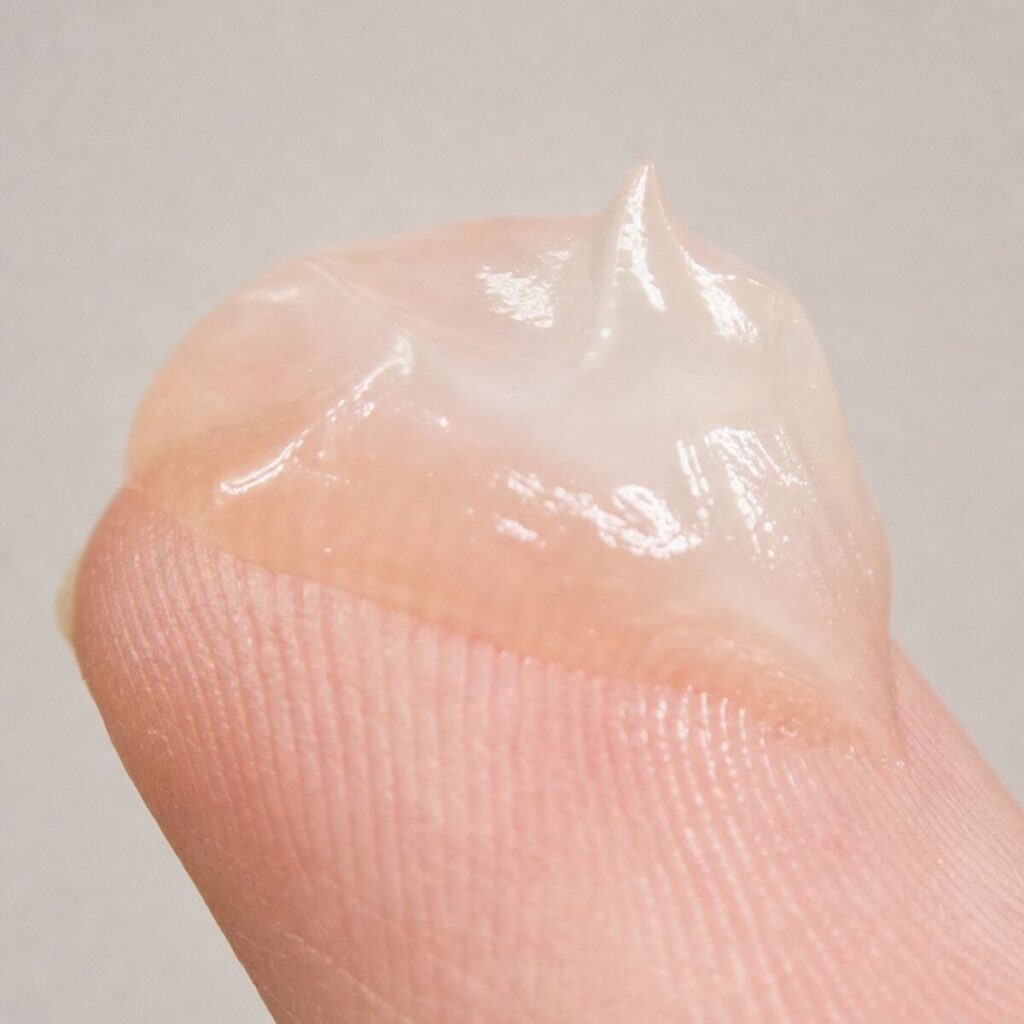
Texture and finish: what to expect
Based on public product descriptions, Acmist Moisturizing Gel is designed to feel quick absorbing and non-sticky. The official brand page describes it as lightweight and suitable for daily use, while retailer information highlights oil-free, quick absorbing, non-comedogenic, and hydrating gel-base features. (brintonhealth.com)
The expected finish is:
- Lightweight rather than rich
- Smoother rather than slippery-oily
- Comfortable rather than occlusive
- More suitable for daytime layering than a heavy balm
If your skin is very dry, you may need something richer at night or on top of this moisturizer in drier climates. If your skin is very oily, start with a small amount and increase only if your skin still feels tight.
How to use it in a routine
The brand page advises cleansing the acne area with a mild face wash, applying an appropriate amount of gel over the acne area and face, massaging lightly, and using twice daily. (brintonhealth.com)
For a cautious daily skincare routine, use it this way:
Morning routine
- Cleanse with a gentle face wash, or rinse with water if your skin does not need a full cleanse.
- Apply toner or serum if you use one.
- Apply a pea-sized to small coin-sized amount of Acmist Moisturizing Gel.
- Let it settle.
- Apply broad-spectrum sunscreen as the final daytime step.
Evening routine
- Remove sunscreen and makeup thoroughly.
- Cleanse with a mild cleanser.
- Apply prescribed or active treatments only as directed.
- Wait if your active product requires a dry-skin application.
- Apply Acmist Moisturizing Gel as the moisturizing step.
With acne treatments
If you use benzoyl peroxide, retinoids, exfoliating acids, or prescription products, introduce Acmist slowly. A moisturizer can support comfort, but combining too many new products at once makes it harder to identify the cause of irritation.
A simple rule: change one thing at a time.
How much to apply
Start smaller than you think.
For oily skin, too much of any moisturizer can feel heavy. Try:
- A pea-sized amount for the whole face if your skin is very oily
- A slightly larger amount if your skin feels tight or dehydrated
- Extra only on dry zones, such as cheeks or around the mouth
Apply in a thin layer. If it absorbs well and your skin still feels tight after a few minutes, add a little more.
When to apply it
Acmist can be considered for:
- After cleansing
- Before sunscreen
- After lightweight serums
- After acne treatments, if your treatment instructions allow
- As a night moisturizer for oily or combination skin
- As a daytime moisturizer in humid weather
If your skin is compromised or irritated, simplify your routine. Cleanser, moisturizer, sunscreen, and any prescribed treatment are often enough.
Product specifications
Here is a practical, non-table overview of the product details shoppers usually compare before buying.
- Product type: Moisturizing cream gel
- Primary positioning: Oily and acne-prone skin support
- Texture: Lightweight gel-cream
- Finish: Marketed as non-greasy and non-sticky
- Highlighted ingredients: Squalane, aloe vera extract, bisabolol, trehalose, vitamin E acetate
- Other listed ingredients: Aqua, betaine, propanediol, emollients, emulsifiers, preservatives, and texture-supporting agents
- Use: Topical skincare moisturizer
- Routine step: Moisturizer, usually after cleansing and before sunscreen in the morning
- Frequency: Public brand directions mention twice-daily use, though individual routines may vary. (brintonhealth.com)
- Pack sizes: Public retailer listings show multiple pack-size variants, including 10 g, 50 g, and 100 g on some pages. (1mg.com)
Always confirm pack size, expiry, seller authenticity, and current ingredient list before purchase.
Price and availability
Prices can vary by pack size, retailer, location, discount, and availability. Because skincare prices change frequently, the best product-page approach is to check the latest price from a trusted pharmacy, marketplace, or authorized seller at the time of purchase.
Before buying, verify:
- The pack size you want
- Current price and discount
- Expiry date or “use before” information
- Seller rating or pharmacy authenticity
- Return policy
- Whether the listing matches the latest packaging
- Ingredient list if you have sensitivities
Smart buying tip
If you are trying Acmist for the first time, consider starting with a smaller pack if available. If your skin tolerates it well and you like the finish, then a larger size may offer better value.
Review-style considerations: what stands out
A thoughtful acmist cream review should not simply say “good” or “bad.” It should explain which skin types, routines, and expectations are most aligned with the formula.
What looks promising
The formula has a sensible mix of humectants, emollients, soothing ingredients, and texture builders. The presence of squalane helps the product feel more skin-softening than a bare-bones gel. Aloe vera extract and bisabolol support the comfort story. Trehalose, betaine, and propanediol help round out the hydration profile.
The product also fits a clear use case: lightweight daily moisturization for oily and acne-prone skin.
What to keep in perspective
This is not an acne medication. It is not a spot treatment. It is not a substitute for sunscreen. It is not guaranteed to prevent clogged pores for every person, even if it is marketed as non-comedogenic.
Non-comedogenic is a helpful product-design claim, but real-life breakout triggers are personal. Your cleanser, sunscreen, makeup, climate, hormones, medications, and application amount all matter.
What may divide users
Some users may love the lightweight finish. Others with very dry or barrier-damaged skin may find it insufficient on its own. Some fragrance-sensitive users may want clearer label confirmation before buying because of variation across public ingredient information.
This is why the most honest review conclusion is: Acmist Moisturizing Gel looks well-positioned for oily and acne-prone skin that needs light hydration, but it should still be patch tested and evaluated within your full routine.
Ingredient synergy: why the formula makes sense
The strength of a moisturizer is rarely one ingredient. It is the blend.
Acmist’s public ingredient profile suggests a layered approach:
- Water base: aqua creates the foundation.
- Humectants: trehalose, betaine, propanediol, and aloe vera extract help support a hydrated feel.
- Emollients: squalane and lightweight esters help soften and smooth.
- Soothing agents: aloe vera extract and bisabolol support comfort.
- Emulsifiers: glyceryl stearate and PEG-100 stearate help create the cream-gel structure.
- Preservatives: phenoxyethanol and ethylhexylglycerin help preserve a water-containing formula.
- Texture agents: ingredients such as behenyl alcohol and acrylamide sodium acrylate copolymer help influence viscosity and sensory feel.
This blend is why the product can be described as more than a gel and lighter than a traditional cream.
How it compares with richer creams
A rich cream often relies on heavier emollients, occlusives, butters, or waxes to reduce water loss and comfort very dry skin. That can be excellent for dry or compromised skin, but it may feel too heavy for oily faces.
Acmist takes the lighter route. Its gel-cream format and product positioning are better aligned with people who want hydration without a greasy finish.
Choose a gel cream like this if:
- Your skin gets shiny quickly.
- You dislike thick residue.
- You need a moisturizer under sunscreen.
- You want comfort without heaviness.
- You live in a humid climate.
Choose a richer cream instead if:
- Your skin flakes frequently.
- Your barrier feels damaged.
- You use strong drying treatments.
- You live in a cold or dry climate.
- Your skin still feels tight after two layers of gel moisturizer.
How it compares with plain aloe gels
Plain aloe gels can feel refreshing, but many are not complete moisturizers. They may lack enough emollients to soften the skin or reduce that post-gel tightness.
Acmist’s advantage is that it pairs aloe vera extract with emollients like squalane and other texture-improving ingredients. That gives it a more rounded moisturizing profile.
If plain aloe gel feels soothing but not moisturizing enough, a cream gel may be the better middle ground.
How it compares with mattifying moisturizers
Some oily-skin moisturizers focus heavily on oil control or a matte finish. That can be useful, but overly mattifying products may leave dehydrated skin feeling tight.
Acmist appears more hydration-and-comfort focused than aggressively mattifying. That may suit users who want a natural, non-greasy finish rather than a powder-dry effect.
Best ways to layer Acmist
With sunscreen
Use Acmist before sunscreen. Let it settle first so your sunscreen applies evenly. If pilling occurs, reduce the amount of moisturizer, wait longer between layers, or simplify the products underneath.
With niacinamide serums
Acmist can generally sit after a lightweight niacinamide serum in a routine, but tolerance varies by formula. If the combination feels sticky or pills, use less serum or switch to alternate timing.
With exfoliating acids
If you use salicylic acid, glycolic acid, or lactic acid, apply your active as directed and use Acmist as the moisturizing step. Do not over-exfoliate simply because you have a soothing moisturizer. Moisturizer supports comfort; it does not cancel irritation.
With retinoids
If your doctor allows moisturizer buffering, Acmist may be used before or after a retinoid depending on your instructions and tolerance. For prescription retinoids, follow medical guidance.
With benzoyl peroxide
Benzoyl peroxide can be drying. A lightweight moisturizer may help reduce the feeling of dryness, but apply products in the order recommended by your clinician or the product label.
Patch testing guide
Patch testing is not glamorous, but it is smart.
Try this approach:
- Apply a small amount behind the ear or along the jawline.
- Wait 24 hours.
- If there is no obvious reaction, apply to a small facial area for two to three nights.
- If your skin remains comfortable, use it more widely.
- Stop use if you notice persistent burning, swelling, rash, or unusual irritation.
Patch testing is especially important if you are acne-prone, fragrance-sensitive, or using active treatments.
What results can you reasonably expect?
A moisturizer can provide immediate comfort and a smoother feel. Over time, consistent moisturizing may help skin feel less tight and better supported, particularly if your routine includes drying cleansers or actives.
With Acmist, reasonable expectations include:
- Skin feels less tight after cleansing.
- The face feels lightly moisturized without a heavy finish.
- Sunscreen may apply more comfortably over hydrated skin.
- Dry patches from routine-related dryness may feel more comfortable.
- The skin may look fresher because it is better hydrated.
Unreasonable expectations include:
- Overnight acne clearing
- Guaranteed pore unclogging
- Scar removal
- Pigmentation correction
- Replacement of prescription treatment
- Guaranteed compatibility with every sunscreen or active
Good skincare works best when expectations are precise.
Common mistakes to avoid
Using too much
A gel cream can still feel heavy if you overapply. Start with a small amount and build only where needed.
Applying to wet, dripping skin
Slightly damp skin can help with moisturizer spread, but dripping-wet skin may dilute the product or make layering messy.
Skipping sunscreen
Moisturizer is not sun protection. Use sunscreen during the day.
Changing your full routine at once
If you introduce a new cleanser, serum, moisturizer, and sunscreen in the same week, you will not know which product caused improvement or irritation.
Expecting a moisturizer to treat acne alone
Acmist can be part of an acne-prone skincare routine, but acne treatment requires the right actives, consistency, and sometimes professional care.
A practical acmist cream review summary
Acmist Moisturizing Gel earns attention because it understands a common skincare contradiction: oily skin still needs moisture. The ingredient profile is built with humectants for hydration, emollients for softness, and soothing ingredients for comfort. The texture positioning makes it especially relevant for people who dislike heavy creams.
The best parts:
- Lightweight cream-gel format
- Squalane for elegant softness
- Aloe vera extract and bisabolol for a soothing profile
- Trehalose, betaine, and propanediol for hydration support
- Non-greasy and non-comedogenic positioning
- Practical for daily use under sunscreen
The watch-outs:
- Not a medical acne treatment
- May not be enough for very dry skin
- Fragrance-sensitive users should verify the current label
- Product listings may differ, so check packaging
- Individual breakout response can vary
The verdict: Acmist Moisturizing Gel is a strong consideration for oily, combination, and acne-prone skin types looking for a light moisturizer that does more than a basic gel but less than a heavy cream.
Why buy from a trusted source?
Skincare authenticity matters. Buying from a reliable pharmacy, authorized seller, or trusted retailer helps reduce the risk of expired, mishandled, or mismatched products.
Before checkout, review:
- Seller name
- Expiry date
- Pack size
- Seal condition
- Storage instructions
- Ingredient list
- Return policy
- Current price
If you receive packaging that looks unusual, has broken seals, or does not match the listing, do not use the product until you verify it.
Frequently asked questions
Is Acmist Moisturizing Gel good for oily skin?
It is marketed for oily and acne-prone skin, with public descriptions emphasizing a lightweight, non-greasy, quick-absorbing, and non-comedogenic profile. (brintonhealth.com) Individual results vary, so start with a small amount and patch test if your skin is reactive.
What are the main acmist moisturizing cream gel ingredients?
Public listings highlight aloe vera extract, squalane, bisabolol, trehalose, and vitamin E acetate as key ingredients. Other listed ingredients include aqua, betaine, propanediol, C12-15 alkyl benzoate, octyldodecyl myristate, glyceryl stearate, PEG-100 stearate, behenyl alcohol, neopentyl glycol diheptanoate, phenoxyethanol, ethylhexylglycerin, and texture-supporting polymers. (1mg.com)
Does Acmist Moisturizing Gel treat acne?
It should be viewed as a moisturizer for acne-prone routines, not as a standalone acne treatment. It may help skin feel hydrated and comfortable, but acne treatment often requires targeted active ingredients or professional guidance.
Can I use Acmist with sunscreen?
Yes, it can be used as the moisturizer step before sunscreen. Apply a thin layer, let it settle, then apply sunscreen generously.
Can I use it at night?
Yes, many people use gel creams at night, especially if their skin is oily or combination. If your skin is very dry, you may need a richer moisturizer or an additional barrier-support step.
Is it fragrance-free?
Check the latest label. Some public retailer copy describes the product as without fragrance, while an ingredient database lists allergen-free fragrance. (1mg.com) If fragrance is a concern, confirm the current packaging before purchase.
Is squalane suitable for acne-prone skin?
Squalane is widely used as a lightweight emollient and is categorized in ingredient references as skin-identical and emollient. (incidecoder.com) However, acne-prone skin is individual, so monitor your response.
Can I use Acmist after salicylic acid?
You may be able to use it as a moisturizer after salicylic acid, depending on your tolerance and the instructions for your active product. If irritation occurs, reduce frequency and consult a professional.
Can I use Acmist with retinol or prescription retinoids?
Many routines include moisturizer with retinoids, but prescription products should be used exactly as directed. If your dermatologist has advised a specific moisturizer method, follow that guidance.
Will it make my face oily?
It is positioned as non-greasy and quick absorbing. Still, applying too much can make any moisturizer feel heavy. Start with a thin layer.
Is it enough for dry skin?
It may help with mild dryness or dehydration, but very dry skin may need a richer moisturizer. The formula is primarily positioned for oily and acne-prone skin.
How often should I use it?
The brand page mentions twice-daily use. (brintonhealth.com) Your ideal frequency depends on skin type, climate, and the rest of your routine.
Make it your light-moisture step
If your skin feels oily but still asks for hydration, Acmist Moisturizing Gel is worth considering. It brings together squalane, aloe vera extract, bisabolol, trehalose, vitamin E acetate, and humectant-supporting ingredients in a lightweight cream-gel format designed for daily comfort.
Choose it if you want a moisturizer that feels clean, layers easily, and supports your routine without the weight of a traditional cream.
Ready to try it? Check the latest pack size, price, expiry date, and ingredient label from a trusted seller before you buy.